We're part of the race.
3MINMAY 20, 2026
[ FROM THE NOTEBOOK ]
On phones, attention, and a conversation with Dr. Thekla Brumder Ross.
Last week, my partner, Becca, and I watched an AI documentary called AI Doc on our couch.
By the end, she turned to me and said something that really hit.
“We’re part of the race.”
She wasn’t wrong. We had spent two hours watching the smartest people in the world describe a technology they don’t fully understand, that they’re building anyway, because the other guys are building it too. Somewhere in the second hour we both realized we weren’t watching it from the outside. We were in it. Had been for years. Just hadn’t picked our heads up to ask whether we wanted to be.
The room was quiet for a long time after she said it.
A few weeks prior, I was in line at Prospect Park with twenty strangers and right on cue, like a synchronized dance, every single one of us pulled out our phone at the exact same moment.
I am not exaggerating. It was choreography.
None of us looked at each other. None of us looked up. The line moved. The phones rose. The reels played.
When I noticed the move my own hand was making, I realized I hadn’t decided to do it.
The phone had.
Wendell Berry has a line about what he calls the rational mind — the kind that runs everything modern. He says the rational mind will always forfeit the past and the present for the sake of the future. Its whole purpose is to outrun loss. Risk. Hurt. Pain. So it builds. It optimizes. It races. It never sits still long enough to ask whether the thing it’s racing toward is the thing it actually wants.
That is what your phone is.
The rational mind in your pocket.
It’s built meticulously by the smartest people in the world to make sure you never have to sit with a single uncomfortable feeling again. To make sure the space between stimulus and response collapses to zero.
I’ve written about the pattern before. Cigarettes. Processed food. Easy credit. Every time we invent a new way to overrun our own instincts, we eventually have to invent a new way to push back.
But here is what’s different this time.
This time, you cannot tech your way out of being run by tech.
This is why I sat down with Dr. Thekla Brumder Ross.
Thekla has spent twenty years inside addiction medicine. Kaiser Permanente. The NIH. The American Psychological Association’s digital harm reduction committee.
She is one of the most credentialed people in the country on what makes a substance addictive — and she does not think the answer to phone addiction is a better phone.
She thinks the answer is two things.
The first is human connection.
“The opposite of addiction isn’t sobriety. It’s human connection.”
The second is what she calls the longer arc.
A phone gives you twenty small hits of dopamine per minutes. Sharp little spikes. Each one fires, fades, and leaves you reaching for the next.
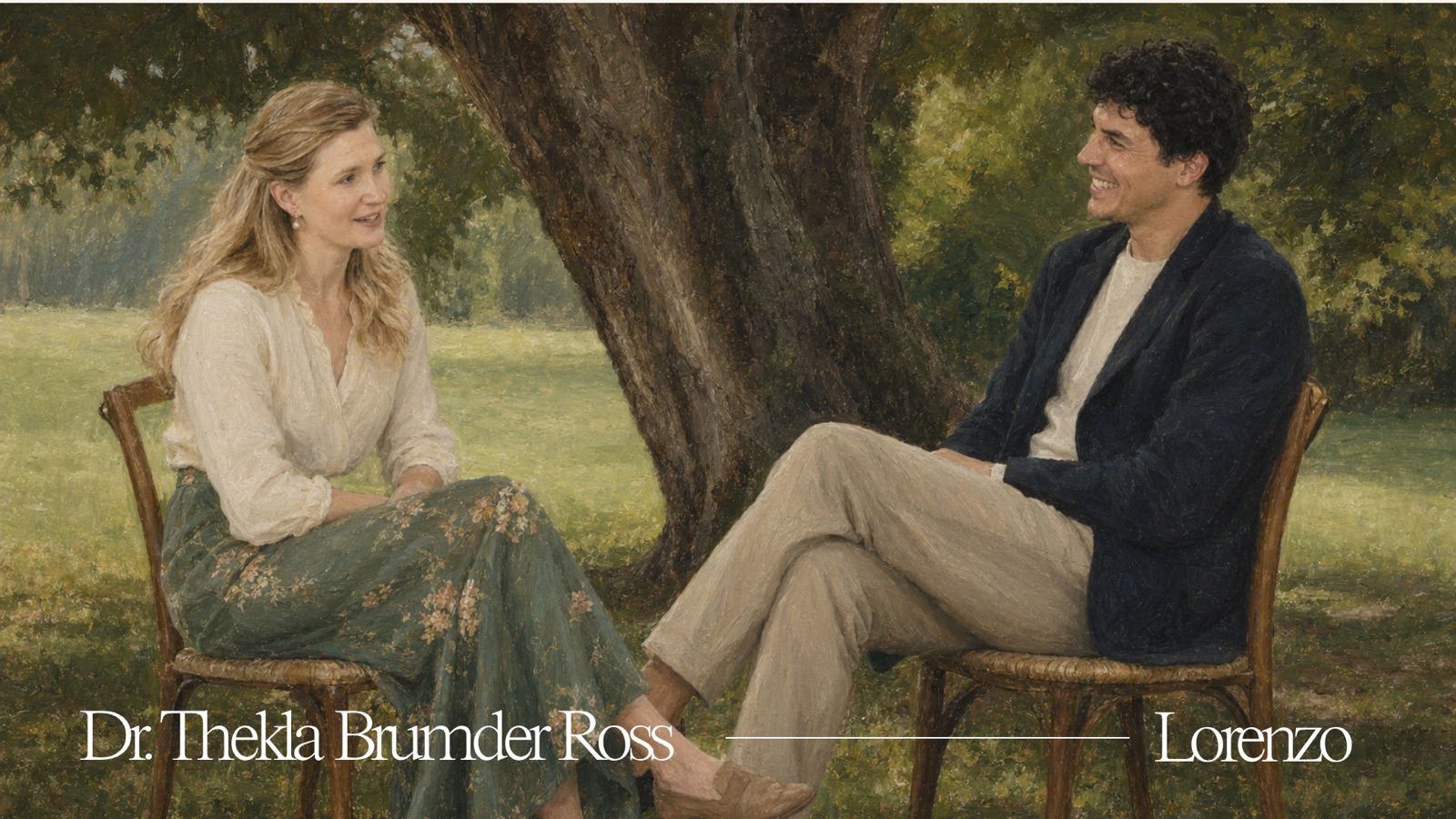 fig 13.1—WE'RE PART OF THE RACE.
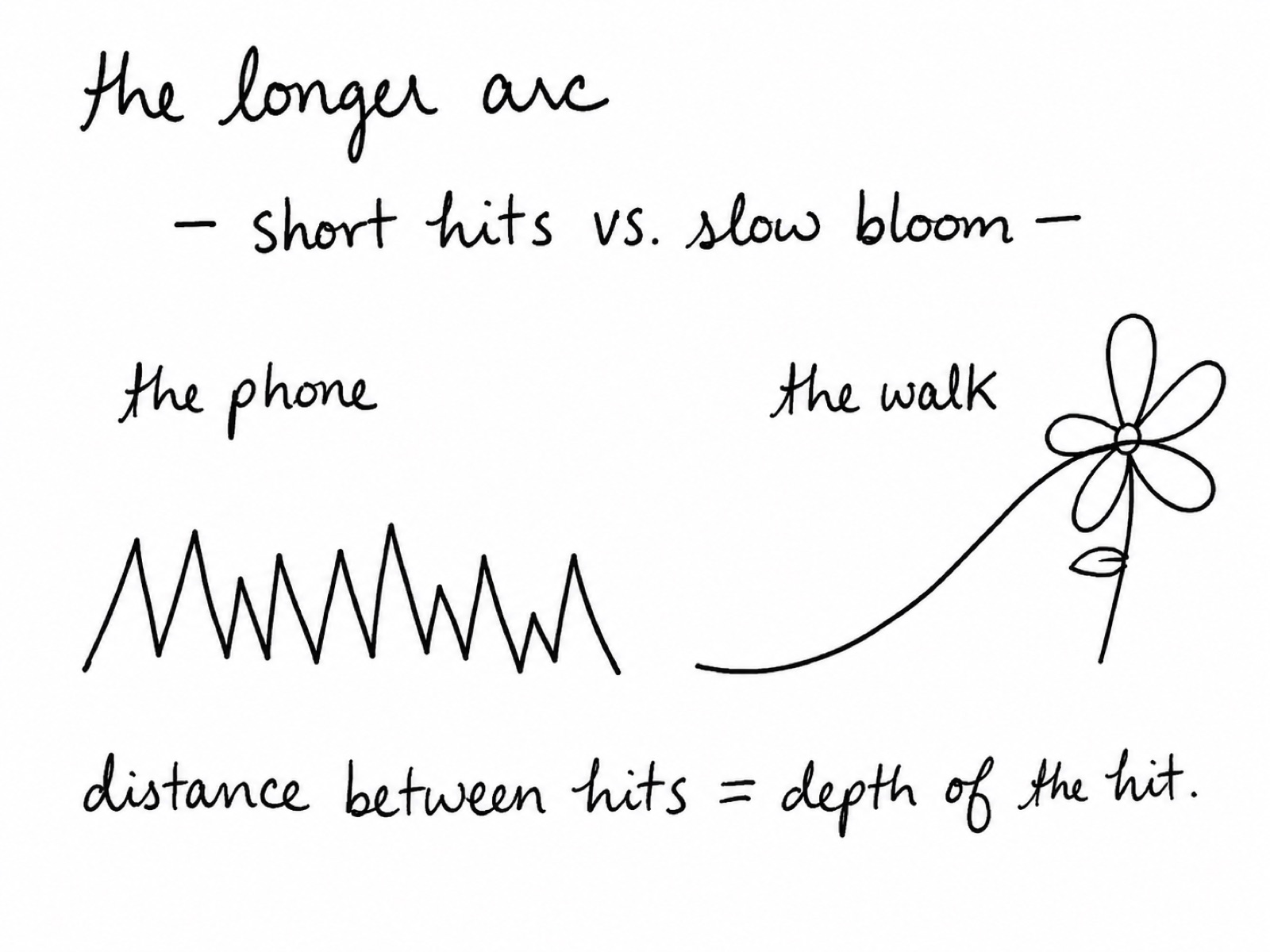 fig 13.2
A walk through the neighborhood gives you one slow bloom. A flower noticed on the way to the coffee shop. The dog at your heel. The line with your hands in your pockets and nothing to do with them.
The hit isn’t as sharp but it lasts the rest of the afternoon.
Distance between hits = depth of the hit.
My partner and I are planning a move out of the city. Slower neighborhood. More yard for Cora, our wonderful dog. Less velocity. We’re doing it because somewhere between the documentary and the line at Prospect Park, we figured out we are part of the race — and we don’t want to be anymore.
This conversation with Thekla was a permission slip.
Yours,
Lorenzo