Racing to the bottom of the brainstem
11MINMAY 7, 2026
[ FROM THE NOTEBOOK ]
what happened to the last twenty years of human attention
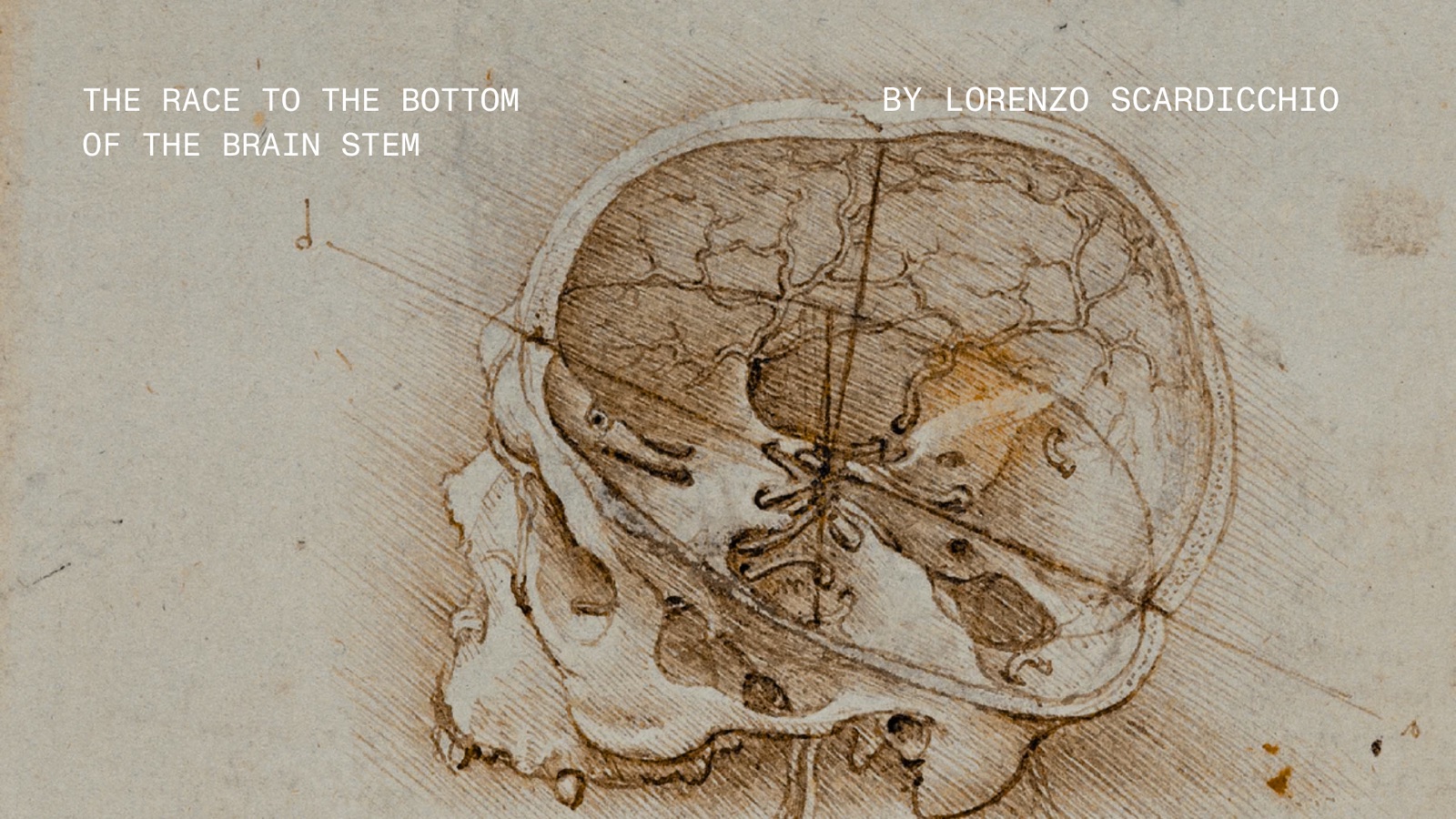 fig 12.1—RACING TO THE BOTTOM OF THE BRAINSTEM
There is a phrase the founders of the Center of Humane Technology, Tristan and Aza use now, when they describe the attention economy. They call it the race to the bottom of the brain stem.
It is one of the more accurate descriptions I have ever read of what happened to the last twenty years of human attention. They mean it almost literally. There are layers of the human brain. There is the prefrontal cortex, which is where you decide things, where you reflect. There is the limbic system, which is where you feel things, where you love and grieve and get angry. And there is, underneath all of that, the brain stem, which is where you simply react. Threat. Reward. Threat. Reward. Lower-frequency cycles, much faster, much harder to interrupt.
What the social media companies discovered, what infinite scroll let them discover, was that the brain stem is much cheaper to engage than the prefrontal cortex. The prefrontal cortex requires that you actually think about whether you want to be here. The brain stem just keeps you here. Refresh. New thing. Refresh. New thing. There is no end-of-page, so there is no moment at which the prefrontal cortex gets called in to ask, do I want to keep doing this?
When you have multiple companies all competing for the same human eyeballs, and the company that gets more eyeballs wins, and the eyeballs are easier to get by engaging the brain stem than the prefrontal cortex, then the entire industry, by the simple ruthless logic of the Munger sentence, races to the bottom of the brain stem.
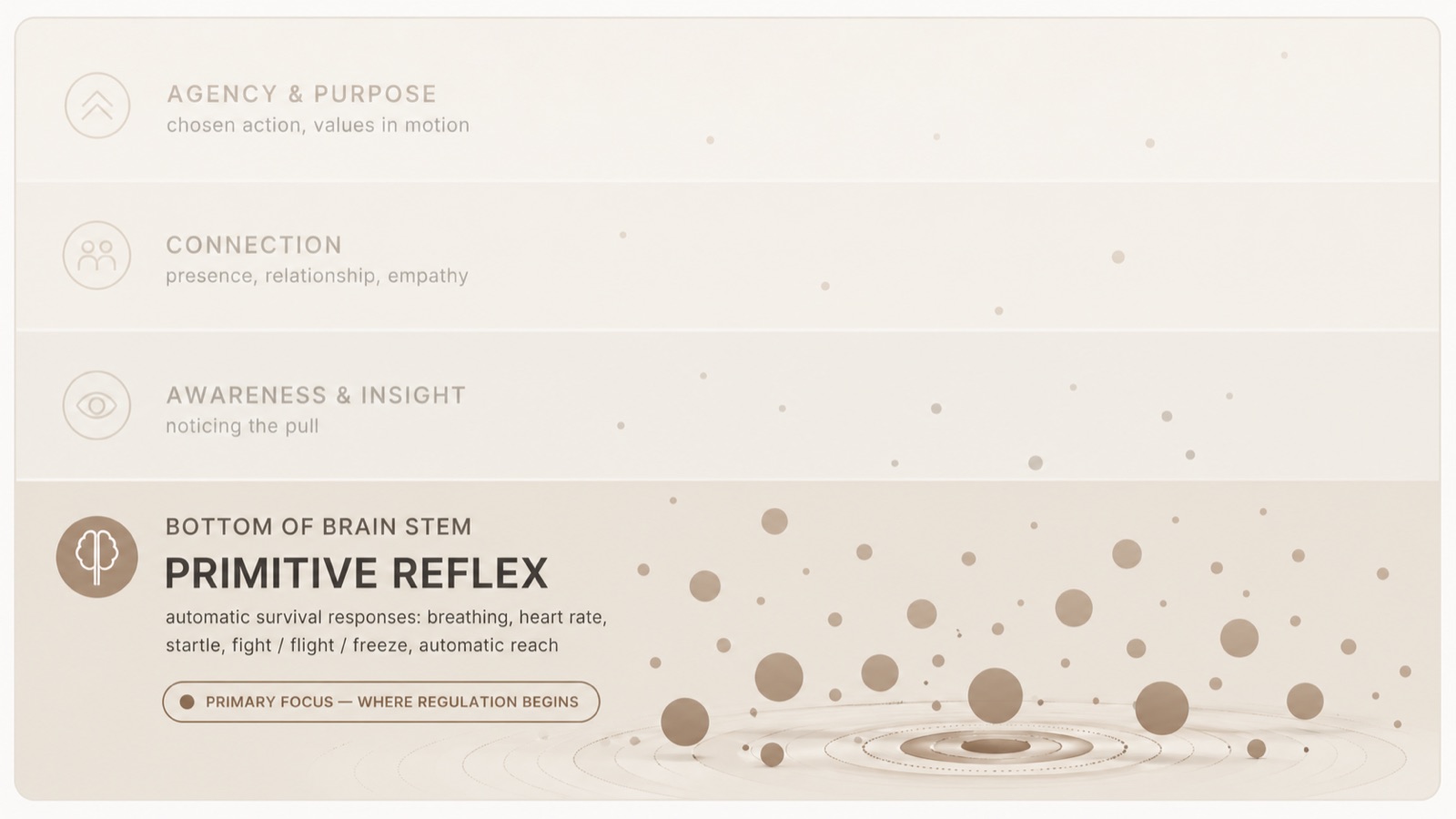 fig 12.2
I want to slow down here, because I think this is the part that matters most.
It would be very easy, reading what I have written so far, to land in a place that sounds something like, the technology is bad, let us return to the soil, let us throw the phones into the river, let us light the candles and read the books and sit in the kitchen. I have flirted with that place. Kingsnorth, author of Against the Machine, lives in that place full-time and writes very beautifully from it. There is a real pull there, especially for someone like me, someone who is Italian enough on the inside to feel that the most honest thing in any house is the table and the bread and the people sitting around it.
But the Munger sentence does not let you off the hook that easily.
Because the Munger sentence is not a sentence about technology. It is a sentence about systems. And every system has incentives, including the kitchen, including the table, including the candle. The reason the candle on my table this morning is honest is not because candles are inherently honest. It is because the incentive structure that produced this candle, which is me reaching for it at six in the morning when I want to write to you, is aligned with the outcome I want, which is to write to you. The candle and I are on the same side.
The problem with infinite scroll is that the incentive structure it entered, advertising-funded social media in an uncoordinated competitive market, was a structure in which the candle was on the other side of the table from me. The candle was being paid by someone else. The candle had a quota.
This is the thing Aza is trying to teach now. He is not trying to teach that technology is bad. He is trying to teach that technology, released into the wrong incentive structure, will be ground by that structure into a shape that is not its original shape, and that the original designer almost never sees this coming, because the original designer is looking at the candle and not at the room.
So what do I do with Serein.
I have been sitting with this for months. I do not have a clean answer. I have a few small things, and I want to say them to you out loud here, because saying them out loud is how I find out whether I actually believe them.
The first thing is that I cannot get away with the Aza defense. I cannot say, I am building this with good intentions, therefore the outcome will be good. The Munger sentence has read me my rights on that one. It does not matter what I believe. It matters what the system Serein lives inside will pay it to do.
The second thing is that the work, then, is not at the level of the feature. It is at the level of the incentive. The question is not, does Serein have a feature called REMEMBERING that surfaces your own words back to you, although it does. The question is, what is paying Serein to exist. If the thing that pays Serein to exist is engagement, time on screen, an advertising business model that needs your eyeballs to keep going down a feed, then over five or ten years, no matter what I or anyone else builds, the body of that incentive structure will grind Serein into a brain-stem product. It will. I am not flattering myself that I am special enough to escape it. Aza was not special enough. I am not.
The third thing, and this is the one I have actually been losing sleep over, is that the only honest answer is to design the incentive structure first and the product second. Subscription rather than ads, so the customer is the user and not the advertiser. A clear refusal to optimize for engagement. A willingness to lose users to better sleep. A willingness to look at metrics like did this person feel more themselves at the end of the week rather than did this person open the app and reflect twelve more times this week. The Munger sentence is not asking me what I believe. It is asking me what I am being paid for. That has to be the first decision and not the last.
The fourth thing is the honest one, and it is that I do not yet know if I will be able to hold this. The pressure to grow, the pressure to take money on certain terms, the pressure to compete with companies that have already accepted the brain-stem race and made their peace with it, that pressure is going to come. It is going to be very strong. I am going to have a board, eventually. The Munger sentence is going to start whispering in my ear about my own incentives, not just the product’s. Show me the incentive, Lorenzo, and I will show you the outcome. And I do not yet know what I will do.
What I know is that I want to tell you the question, before I know the answer to it. Because the people who got us into the last twenty years are the people who waited until they had the answer before they told you the question. They got rich first and confessed second. I do not want to do that. I want to write the confession in advance, in case it helps me hold the line later.
I have been thinking, while I write to you, about a thing Bill said to me on a Tuesday afternoon in his office, with his glasses slightly fogged and his hands folded the way they fold when he is about to give me a sentence I will be using for the rest of my life.
He said, the work is not what you do, it is what you decline to do.
I sat with that for a long time. He meant a lot of things by it, but one of the things he meant, I am sure, is that the most important decisions in any practice are subtractive. They are about the things you say no to. They are about what you refuse to do even when refusing costs you. The shape of an integrated person, or an integrated company, is not the list of things they have done. It is the list of things they could have done and did not, because they understood that doing those things would have ground them into a different shape than the one they were trying to be.
The Munger sentence and Bill’s sentence are the same sentence, said from different angles. Show me the incentive, and I will show you the outcome. If you want a different outcome, you have to refuse certain incentives, even ones that look like opportunities, even ones that everyone around you is taking. You have to be willing to be smaller, slower, less-funded, less-celebrated, more obscure, in order to be the thing you actually want to be. You have to trust that the body wins, and arrange your incentive structure so that when the body wins, the body wins in the direction you wanted to go.
This is, by the way, also yoga. This is also what Pamela was trying to teach me last week, when she had me in a pose I wanted to push past, and she said, the pose is not where you are trying to go. The pose is where you are right now. She meant that the entire shape of a practice is determined by what you refuse to push through. The body wins. So you arrange the practice so that the body’s winning is the same thing as your growing.
I am trying to do this with Serein. I do not know yet whether I will succeed. I think I have a real chance, because I am one of the only people I know in the AI space who has gone to the trouble of reading Munger and Kingsnorth and Larry and Bill all at the same time, and who has sat in front of enough candles, and who has been on enough mats, to know that the body wins. Most people in the space have not yet learned this. They still think the ego wins. They still think the intention wins. They still think a press release wins.
It does not. It never has.
There is one more thing I want to say to you, dear reader, before the espresso has cooled and the day has fully arrived and the candle has gone out on its own.
It is something Aza said, in the middle of telling the infinite-scroll story, that I keep going back to. He said, focusing on the individual, or focusing just on one company, blinds you to thinking about how an entire ecosystem will work.
I think this is the deepest thing he said, and I think most of us, including me, are still not ready for it.
What he is saying is that the unit of analysis that matters is not the company. It is not the product. It is not even the founder. It is the ecosystem. The web of incentives in which the thing lives. And almost every conversation we have about technology is happening at the wrong level. We argue about whether Mark Zuckerberg is a good person or a bad person, whether Elon is a genius or a crank, whether OpenAI is being responsible or reckless. These are the wrong arguments. These are arguments about candles. The room is on fire.
If the entire ecosystem is racing to the bottom of the brain stem, then the question of whether any individual candle in that room is well-intentioned is a small question. The room will burn. The Munger sentence will not allow otherwise. The only useful work, at the level of the room, is the work of changing the room. Changing what gets paid for. Changing what gets celebrated. Changing what gets investment. Changing the laws, even, in some cases. Changing the cultural pressure on the founders, so that the founders themselves face an incentive to refuse certain incentives.
I think this is going to be the work of the next twenty years for a lot of us.
The work of changing the room becomes just as important as the work of building the next product. Because if we do not change the room, then the next product will go the same way infinite scroll went, and we will look up in 2046 and find that another two hundred thousand lifetimes a day have been quietly redirected somewhere none of us, individually, ever wanted them to go.
I am not sure how to do this. I am sure that I have to learn how. I am sure that I cannot do it alone. I am sure that the people who are going to be useful, in the next twenty years, are not the ones who are loudest right now. They are the ones who are sitting in front of half-burned candles at six in the morning, asking what the body of the system is actually being paid for, and what they themselves are actually being paid for, and what they are willing to refuse.
I would like to be one of those people. I am not yet. I am writing this letter to you partly so I can become one.
Thank you for reading,
Lorenzo