Show me the incentive, I'll show you the outcome
5MINAPRIL 25, 2026
[ FROM THE NOTEBOOK ]
A Friday morning, a cold espresso, and a Tristan Harris podcast
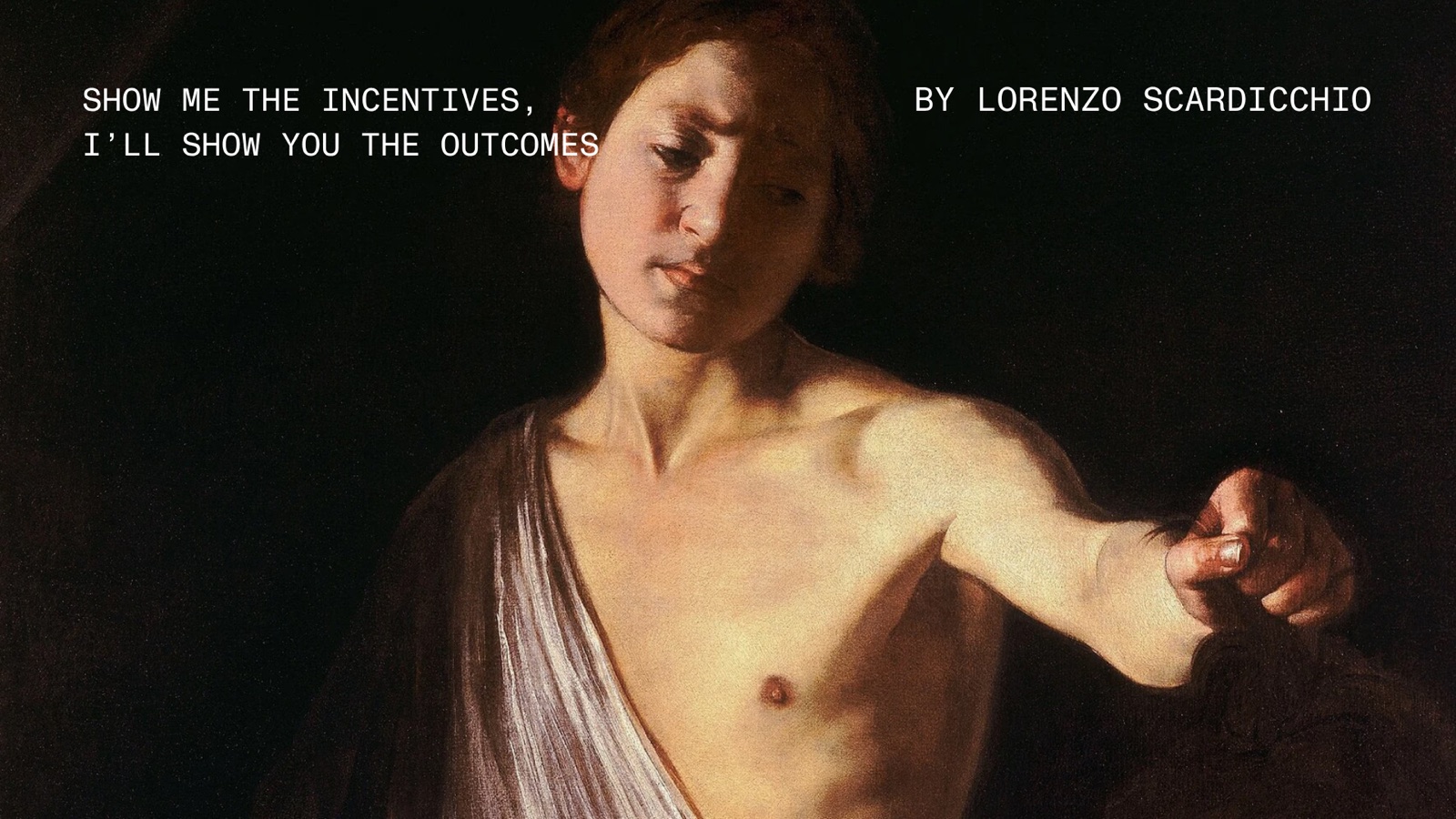 fig 10.1—SHOW ME THE INCENTIVE, I'LL SHOW YOU THE OUTCOME
Dear reader,
I am writing to you from the kitchen table on a Friday morning in April. The espresso has gone cold next to my keyboard, the way it always does. Outside the window, the light is doing that pale, almost-spring thing it does in the early mornings here. Diffuse, watery, undecided. My phone is face down on the table, which is the small ritual I have been trying to keep when I write. Sometimes I keep it. Sometimes I don’t.
I just finished watching Tristan Harris talk to Kara Swisher about how AI is impacting humanity. I watched it because a friend sent it to me. And I watched it because, and this is the part that has been sitting on my chest all week, I have spent the last few years of my life building something that lives uncomfortably close to what he is warning about.
Let me say it plainly so I cannot sneak away from it. I am building an AI product.
It is called Serein. The name is a French word for that fine almost-rain that falls out of a clear sky. The product is, on its best days, a quiet contextual memory. A place where someone’s own words come back to them when they need them.
On its worst days, in the hands of the same incentives Tristan was naming, Serein would be exactly the kind of thing he is begging us not to build.
I keep both of those facts in the same body. I do not know what to do with them yet.
Tristan kept saying this phrase: anti-human future. He kept returning to it the way you return to a tooth that hurts. Five companies including Google, Meta and Tik-Tok and the like. The handful of soon-to-be-trillionaires whose digital progeny will, if we let them, inherit the earth in our place.
I want to tell you that I was watching this podcast and shaking my head at someone else. I want to tell you I was watching it the way I watch political news, at a distance, with a kind of professional curiosity. But that is not what happened. What happened is that my chest tightened in the specific way it tightens when someone is describing the part of your life you have been refusing to look at directly.
Dr. Greg Finch, aka Greg, my friend and my teacher, the person whose voice I carry around inside my head whether I want to or not, taught me a methodology that he calls being a guide. It is not coaching. It is not advising. It is, in his phrase, the practice of helping someone see what is in them without telling them what they’re seeing. It is process-oriented. It is witnessing. In the most literal sense, it is the opposite of the optimization machine Tristan was describing.
Larry McEnerney, whose lectures I have listened to so many times I can hear his voice when I read my own drafts, would say it is reader-centered. The work creates value for the person, not for you. You are not the protagonist. The protagonist is in front of you, with their own life, their own wisdom, their own electricity.
This is the philosophy I claim to be building Serein from.
And then I open my laptop in the morning and notice, the way you notice a stain on a shirt you have worn for an hour without seeing, that I am also building it inside of incentives. That there is a market. That there is a race. That if I do not do this, someone else will, and the someone else will almost certainly do it worse. This is the exact thought, word for word, that Tristan was naming as the death-wish logic of the people he is most worried about.
I sat with that for a while this morning. I did not like sitting with it.
There is a Charlie Munger line I have read so many times I say it as a knee jerk reaction.
Show me the incentive, I will show you the outcome.
I keep it pinned in brain somewhere because it is the kind of sentence that keeps me honest at the level where honesty is hardest. The level where I want very badly to believe my own marketing.
I do not know if that’s true. I am going to try to find out. I am going to try not to lie to myself about it. I am going to keep Munger’s incentive quote in mind as I build this. I am going to keep reading Kingsnorth, Against the Machine even though it makes me uncomfortable, because the discomfort is, I think, the only honest thing in the room.
I am going to keep asking, every morning, whether I am building a thing that helps a person see what is already in them, or a thing that quietly moves the “in-them” somewhere else.
The light has shifted while I have been writing. It is fuller now. The undecided morning has become a decided morning, the way they always do.
I am going to close the laptop, finish what is left of the espresso, and walk for an hour before I do anything else with my day. Not because the walk solves anything. Because the walk is the thing the optimization river cannot metabolize.
That feels, this morning, like the only honest place to start.
Thank you for reading.
Love,
Lorenzo